

Composing a musical setting of the Requiem Mass is widely regarded as one of a composer’s most significant artistic achievements. The Requiem Mass is the Catholic liturgy for the dead, intended to pray for the repose of the departed’s souls it is easy to see why it attracts composers, instilling a solemn sense of hope for eternal rest, with foreboding judgement.

For centuries, settings of the Requiem were performed within the liturgy as plainchant, before later evolving into richly textured polyphony in the hands of composers such as Tomás Luis de Victoria. Mozart’s Requiem, which was left unfinished at the time of his death, shaped the enduring perception of the Requiem as a composer’s final testament: a swan song, a magnus opus, or a fait accompli.

It is therefore unsurprising that the Requiem Mass proved so compelling during the Romantic era. In the eighteenth century, a “romantic” was characterised by detachment from society and modernity, a tendency toward introspection and emotional extremity. Romanticism bore a long list of composers determined to expand the scale and expression of the orchestra, to probe the depths of human emotion. Romanticists often held a nostalgia for something unknown or unattainable.

In this context, the Requiem Mass, with the uncertainty of fate after death, attracted German Romantic Composers such as Hector Berlioz and Johannes Brahms. Their Requiem settings were richly orchestrated, placing musical demands on both soloists and chorus. Requiem Masses became expansive, declarative statements for the concert hall, no longer confined to their liturgical origins. Giuseppe Verdi’s Requiem, scored for chorus, four vocal soloists, and large orchestra, is as dramatically charged and theatrically conceived as any of his operatic works, and as such, performing as part of a liturgy would be almost impossible.
The Requiem Masses of the French Composers, Fauré and Duruflé, stand out in this context. They are restrained, and the orchestration can easily be dispensed for an Organ part, making a liturgical performance manageable.
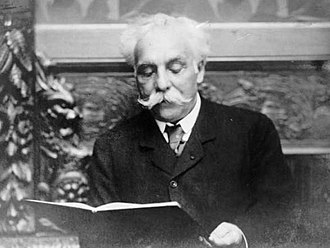
When Fauré composed his Requiem in the 1880s, French Impressionism was reshaping the artistic landscape, offering a gentle counterpoint to the grandeur of German Romanticism. In musical terms, Fauré’s compositions lay the groundwork that would later be explored by impressionist composers such as Debussy and Ravel.
In 1854, at the age of nine, Fauré was sent to the École Niedermeyer in Paris, where he trained as a church organist and choirmaster. Among his teachers was Camille Saint Saëns, who became both mentor and lifelong friend. By the age of nineteen he had already distinguished himself, winning a composition prize with his Cantique de Jean Racine.
After graduating in 1865, Fauré supported himself through a modest career as an organist and teacher, leaving limited time for composition. When he did turn his hand to composition, Fauré deliberately avoided the grand orchestral gestures that might have brought him wider fame with the German romanticists, choosing instead to cultivate an elegant, subtler musical language. That is not to say that Fauré was musically conservative, as his latter compositions begin to push the rules of harmony in new directions.
The Requiem was composed when Fauré was in his forties and has become one of Fauré’s most enduring works. Fauré said of his Requiem:
“It has been said that my Requiem does not express the fear of death and someone has called it a lullaby of death. But it is thus that I see death: as a happy deliverance, an aspiration towards happiness above, rather than as a painful experience… I have also instinctively sought to escape from what is thought right and proper, after all the years of accompanying burial services on the organ! I know it all by heart. I wanted to write something different”.
A fully orchestrated version was performed at his own funeral in 1924.
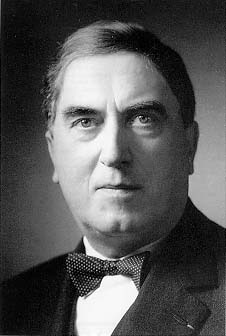
When Duruflé entered the Paris Conservatoire in 1919 at the age of eighteen, Fauré (then in his seventies) was serving as its director. Despite the generational gap, the two composers share a striking affinity, favouring elegance, restraint, and subtlety over grand gesture.
Duruflé published only fourteen works during his lifetime, composition being for him a painstaking process of continual revision and impeccable craftsmanship. Unlike his contemporary and friend Olivier Messiaen, he made no attempt to forge new musical forms or experiment with radical harmonic languages. Instead, he looked back to plainsong for inspiration, and to an earlier generation of French composers: Franck, Debussy, Ravel, Dukas, and of course Fauré.
The Requiem was written between 1941 and 1947. Its foundations are in plainsong, which Duruflé enriches with layers of harmony and crafted organ accompaniment. In his own notes on the work, Duruflé wrote:
“This Requiem … reflects, in the immutable form of the Christian prayer, the agony of man faced with the mystery of his ultimate end. It is often dramatic, or filled with resignation, or hope or terror, just as the words of the Scripture themselves, which are used in the liturgy. It tends to translate human feelings before their terrifying, unexplainable or consoling destiny”.
Fauré Requiem
Introït et Kyrie: Fauré begins in a manner reminiscent of Mozart: slowly, quietly, and in the key of D minor. The music rises to its first climax at “et lux perpetua” (and everlasting light), before the tenors repeat the prayer for eternal rest on a simple yet divine melody. As in Mozart’s setting, Fauré bases the Kyrie on the same melodic material, now presented in unison.
Offertoire: The movement opens with a brief canon for altos and tenors, in a modal melody that pleads for the souls of the departed to be freed from eternal punishment. This sequence is repeated, each time beginning a step higher, creating an increasingly urgent call to Christ. The baritone then enters with “Hostias et preces”, after which the choir returns to the opening plea, before the movement closes with an uplifting “Amen”.
Sanctus: The sopranos begin softly with a simple three‑note phrase that rises and falls in serene repetition, echoed immediately by the men’s voices. Beneath them, the organ offers gentle arpeggios that gradually build the texture. The movement reaches its climax at “Hosanna in excelsis” (Hosanna in the highest).
Pie Jesu: The soprano soloist offers a tender plea for eternal rest, each repetition gaining in intensity and expression. In the final phrase, the line settles into two gently alternating notes, arriving at a sense of stillness and hope.
Agnus Dei: One of the most lyrical moments of the Requiem, this movement opens with the tenors echoing the instrumental introduction. The choir answers in the minor key until the tenors gently guide the music back into the major key. A sudden uplifting modulation leads the sopranos into a long, radiant “Lux”, after which the choir, now divided into six parts, sings “Lux aeterna luceat eis”. The movement closes with a brief reprise of the Introit, before the orchestra recalls the Agnus Dei melody to bring it to rest.
Libera me: Another melodic masterclass from Fauré, this movement opens with the bass soloist. The choir enters tentatively with “Tremens factus sum ego” (I am trembling), before the “Dies irae” erupts in fortissimo chords, only to soften suddenly on the final “et lux perpetua luceat eis”. The choir then repeats the baritone’s opening plea in full unison, calmly and with assuredness.
In Paradisum: Arpeggios in the accompaniment rise as the sopranos sing an expressive melody. Finally, the choir returns quietly to the opening words or the Reuqiem, “Requiem aeternam”.
Duruflé Requiem
Introit: The plainsong “Requiem aeternam” is introduced by the tenors and basses, supported by continuous running semiquavers in the organ. Above this, the sopranos and altos sing a soft, ‘ah’. The movement grows steadily in intensity towards the phrase “et lux perpetua luceat eis” (and let light perpetual shine upon them), before the semiquavers return, slowing down into the Kyrie.
Kyrie: Written in a contrapuntal style, the Kyrie pays clear homage to the Renaissance composers that inspired Duruflé. At its climax, he achieves a rich woven four‑part choral texture, over which the organ presents the plainsong in long notes, in the manner of a thirteenth‑century cantus firmus. Kyrie asks for Christ to deliver his mercy.
Domine Jesu Christe: The movement opens in a dark, mysterious atmosphere before the altos introduce a rich, chant‑like melody on “Domine Jesu Christe, libera animas fidelium” (Lord Jesus Christ, deliver the souls of the faithful). Suddenly the full ensemble erupts with the urgent cry “libera eas de ore leonis” (Save them from the lion’s mouth!). What follows is one of the most dramatic passages in the entire work. Yet even amid this intensity, Duruflé repeatedly returns to the comforting refrain of the women’s voices, “Quam olim Abrahae promisisti” (As you once promised to Abraham), a moment of luminous reassurance within the surrounding turbulence.
Sanctus: A song of praise, the movement opens with the return of the rippling semiquavers first heard in the Introit. The words “Sanctus, Sanctus, Sanctus” (Holy, Holy, Holy) rises in both pitch and dynamic. This movement is joy rising gradually until it can no longer be contained.
Pie Jesu: Like Fauré before him, Duruflé omits most of the Dies Irae (Day of Wrath) sequence, traditionally set in a dramatic manner. Instead, he retains only the gentle plea of the “Pie Jesu” (Merciful Jesus). As in Fauré’s setting, the movement is given to a soprano soloist; however, the similarity ends there. Where Fauré evokes a childlike innocence, Duruflé’s solo captures both the light and the shadow, the joy and the sorrow that surround the mystery of death.
Agnus Dei: Whereas the Pie Jesu carried an intensity, the Agnus Dei offers profound stillness. The harmony moves with deliberation, creating an atmosphere of serenity.
Lux Aeterna:The joy of perpetual light, promised in the Introit, is here given full radiance, alternating between complex polyphony and clear and simple, plainsong textures.
Libera Me: The final dramatic outburst of the Requiem. With each choral entry the music becomes increasingly urgent. The men’s voices deliver a desperate cry on “Tremens factus sum ego” (I am trembling), before we hear the infamous Dies Irae plainsong motif. Gradually this turbulence subsides to allow the melody “Requiem aeternam” to emphatically restore the calm.
In Paradisum: Duruflé’s harmonies shimmer with quiet hope, and the music seems to drift ever upward, ending the work not in sorrow but in a serene promise of eternal rest.
Samuel Foxon, March 2026
If you wish to use or adapt any part of these notes, please do get in touch!