

Carmina Burana is a divisive work and always has been. Its premiere at the Oper Frankfurt in 1937 took place within the complex cultural climate of 1930s Germany, and the work’s bold musical language and salaciousness quickly made it a subject of debate.
Initial responses from the Nazi press were cautious. The party newspaper, the Völkischer Beobachter, criticised the work’s syncopated bounce, drawing unfavourable comparisons with jazz, an art form which the regime associated with cultural degeneracy. The text, revelling in satire and the pleasures of earthly life were regarded as morally suspect and at odds with official aesthetic ideals of the regime. This was not music that came from the high romantic lineage of German composers such as Wagner, and was denounced with racist taunts.
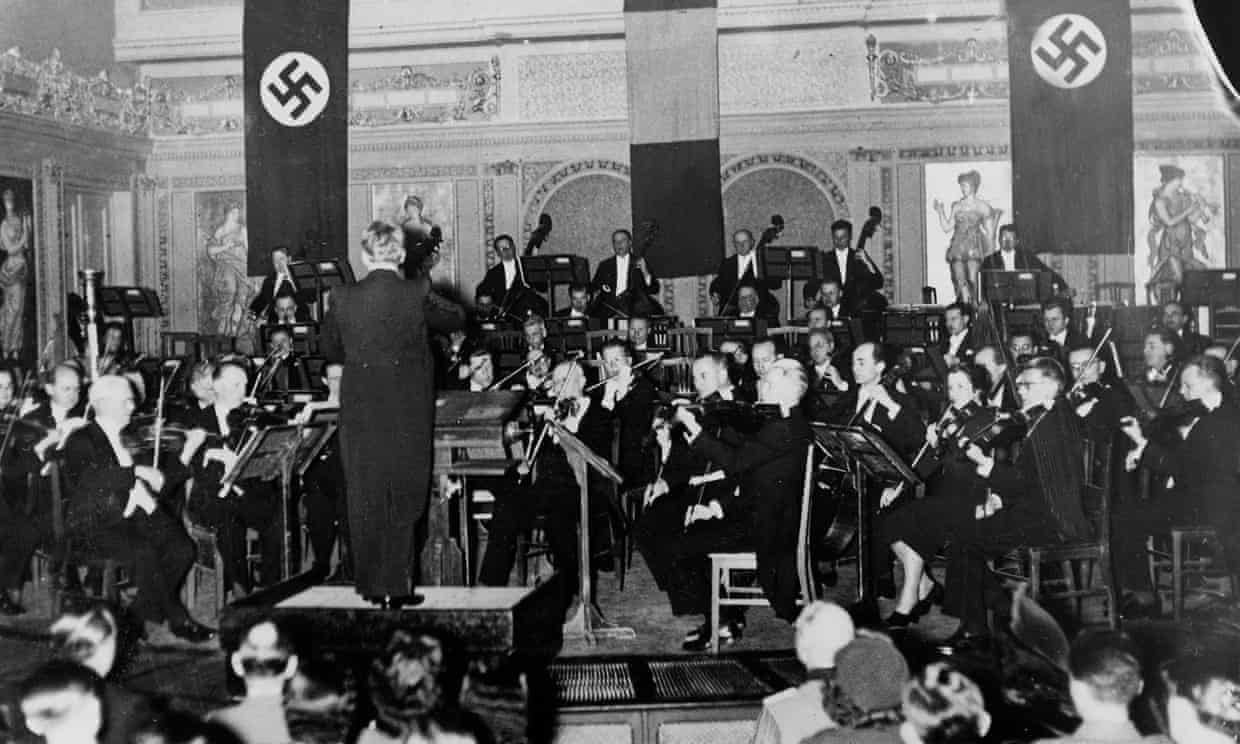
Yet this was not the perception of the general public, who enjoyed the work, with its exciting rhythms, direct harmonic language, and peculiar subject matter. Faced with its undeniable popularity, the regime recalibrated its stance. Joseph Goebbels (Nazi Propaganda Chief), initially wary, later recorded in his diary that the score contained “extraordinary beauties.”
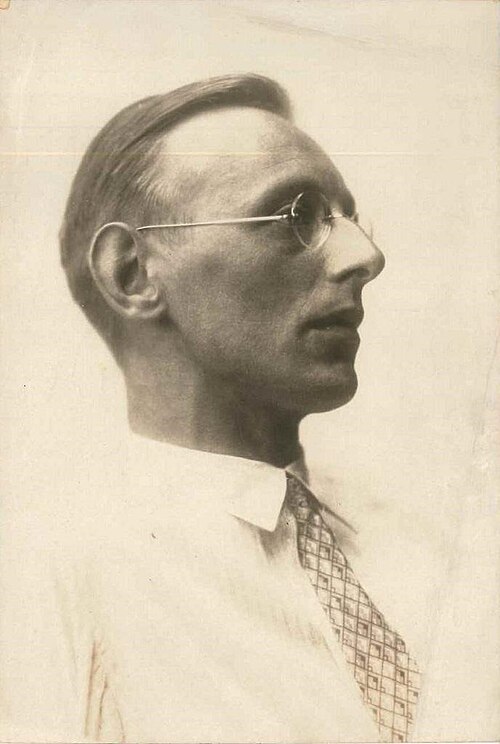
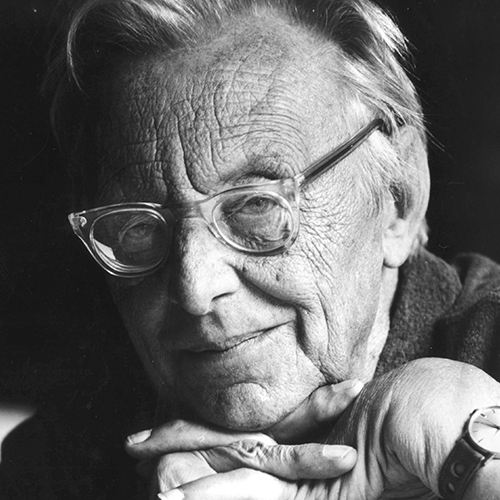
Carl Orff (1895–1982) entered the Munich Academy of Music in 1912, a decision that set him at odds with his family, who had hoped he would pursue a military career in the tradition of his father. The outbreak of the First World War altered that path dramatically. In 1917, Orff was called up for military service, an experience that proved both traumatic and formative. During his time at the front, he became severely injured when a trench collapsed, leaving him close to death.
The years of the Weimar Republic ushered in a period of artistic experimentation and relative cultural liberalisation in Germany, an atmosphere that proved formative for Carl Orff. During this time, he held posts at opera houses in Mannheim and Darmstadt, whilst developing his own compositional voice through song and stage works.
Orff moved in similar social circles to playwright Bertolt Brecht and engaged with the radical musical languages of composers such as Kurt Weill, Arnold Schoenberg and Igor Stravinsky. He also became involved in the progressive educational reforms championed by Leo Kestenberg, whose socialist-inspired programme sought to broaden access to music education across Germany.
This flourishing cultural landscape was abruptly curtailed in 1933, when the Nazi Party came to power. Many of the leading artistic figures associated with modernism and progressive politics were forced into exile, bringing a decisive end to the brief but vibrant openness of the Weimar years. Schoenberg, Stravinsky, and Kestenberg were all declared “degenerate” and their works were discouraged, suppressed, and even banned.
The influence of Leo Kestenberg proved decisive in shaping Carl Orff’s work during the 1930s. Turning his attention increasingly toward what he termed Schulmusik (school music), Orff believed that musicality was innate in all children. Orff set out an innovative pedagogical approach that combined movement, speech, and dance with improvisation on mainly percussion-based instruments. The effectiveness of Orff Schulwerk still informs early-childhood music education today.
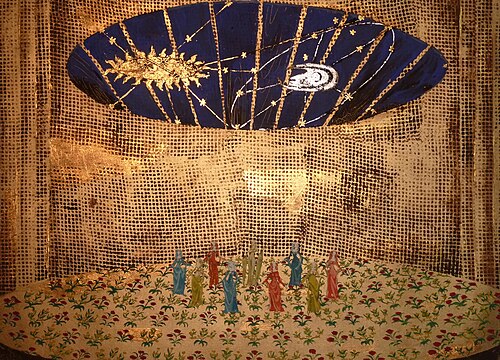
Orff’s pedagogical work also shaped his compositions. He simplified his use of harmony, favouring rhythmic diversity to enhance the text, and he believed that for music to have the maximum impact it must be given a theatrical presentation. The Text of Carmina Burana matched his aesthetic, with its blend of satire, irreverence, and sincerity.
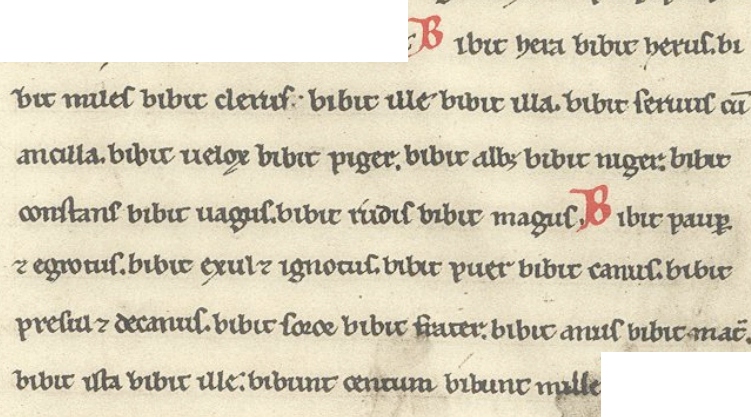
Carmina Burana takes its title from the Latin meaning ‘Songs of Beuren.’ The name refers to a thirteenth‑century manuscript discovered in 1803 at the Benedictine abbey of Benediktbeuern. The collection is an anthology of medieval poems written primarily in Latin, with elements of Middle High German and Old French. The authors were known as goliards: nomadic clerics and students who had grown disillusioned with the Church’s hypocrisies. Over‑educated and under‑motivated, they turned their energies toward satire, irreverence, and the celebration of the carnal pleasures over the spiritual.
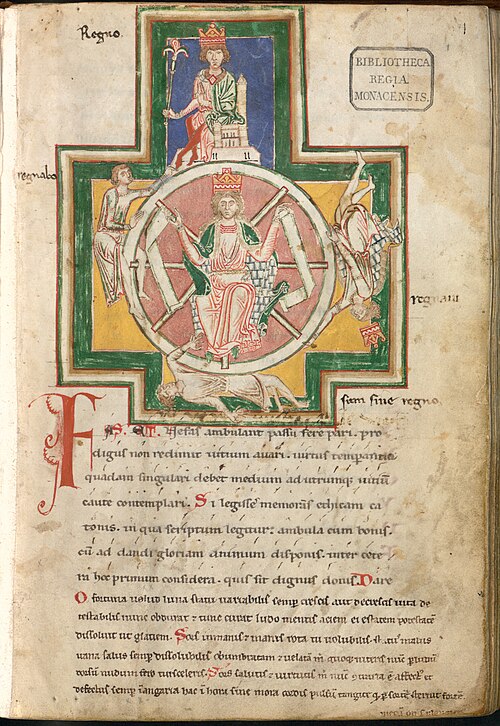
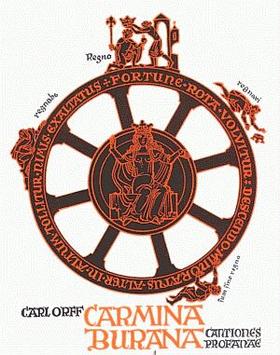
The manuscript’s cover depicts the goddess Fortuna poised atop the wheel of fortune, around which four figures are arranged and labelled regnabo (I will reign), regno (I reign), regnavi (I reigned), and sum sine regno (I am without a realm). Orff frames Carmina Burana with this image in mind: The work opens and closes with the monumental chorus ‘O Fortuna’, telling us of the capricious Goddess Fortuna and her ever-turning wheel of fortune. Throughout the sequence of movements, this idea is reflected: as the wheel turns, joy can turn to bitterness, and hope can turn to grief.
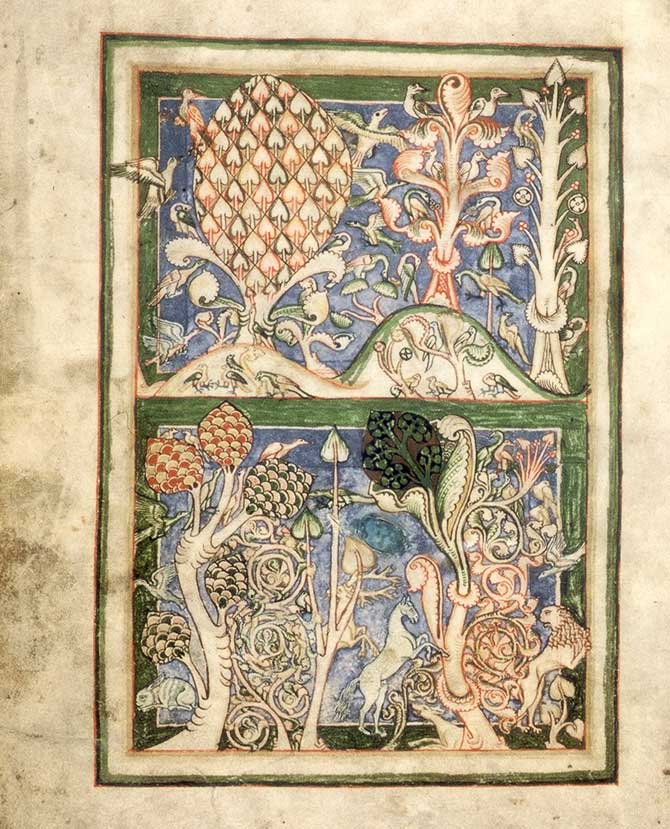
There are three contrasting central sections. The first, Primo Vere (In Springtime), greets the renewal of the natural world with rustic choruses and buoyant dances. As winter recedes, the music seems to quicken and brighten; rhythms become more animated, textures more transparent. The brief instrumental interlude Tanz (Dance), revels in the joy of spring.
Yet it is not only nature that awakens – so too does human desire, portraying young men and women drawn irresistibly to one another as the season turns.
Curiously, the Queen of England has a mention. The queen in question was Eleanor of Aquitaine, who was no stranger to the goliards and troubadours, and someone who had a heavy hand on the wheel of fate. A formidable and controversial figure, Eleanor had first been married to Louis VII of France, accompanying him towards a crusade in manly garb, which was so scandalous that the Pope issued a Bull forbidding women to ever accompany a crusade again. Following the annulment of that marriage, she wed the much younger Henry II of England, whose accession to the English throne two years later amplified her political influence. Her wealth, beauty, ambition, and no doubt notoriety, meant the troubadours and goliards often referenced her.
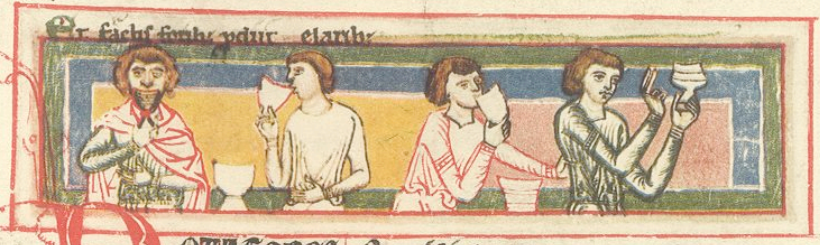
The second section, In Taberna (In the Tavern), plunges us into a very different world: one of excess and irreverence. Its opening number is the only poem in Carmina Burana that can be attributed to a specific medieval author, the so-called Archpoet. The poet confesses to a life devoted not to piety but to wine, chance, and earthly pleasure – a celebration of the goliardic appetite.
What follows is one of the work’s most theatrical moments, the lament of the roasting swan. Skewered on the spit and anticipating its fate, the bird delivers its complaint in a high tenor line, accompanied by an almost inebriated accompaniment.
A satirical song of the abbot of the mythical Cockaigne pokes fun at just some of the church’s hypocrisies – the church is full of drinkers and gamblers. Thus follows an exhaustive list of all those in the tavern.
The third section, Cour d’Amours (The Court of Love), offers an uninhibited celebration of desire and youthful love. The musical language softens and becomes more lyrical, creating an atmosphere of intimacy after the bravado of the tavern. Cupid hovers over the scene, and young lovers find themselves irresistibly drawn together. At the centre of the section, the baritone soloist attempts his own act of seduction, only to find himself exposed and gently mocked. What follows is a sequence of increasingly playful (and, at times, risqué) songs, suggesting that, for the moment at least, Fortune’s wheel has turned favourably.
The section concludes with a brief chorus that parodies the liturgical Ave Maria. In place of the Virgin Mary, however, the text exalts figures drawn from romance and classical mythology: Blanchefleur (the heroine of many a twelfth-century love story), Helen of Troy (daughter of Zeus), and Venus, (goddess of love).
Then, the wheel turns again.
It is easy to see why the third Reich was suspicious of this work as it is flush with satire and double entendre, and lacking in any subtlety. Such directness sat uneasily within a regime preoccupied with ideological control. However, those same qualities help to explain the work’s extraordinary popular appeal. Carmina Burana was never intended as a political work, and yet became a political tool.
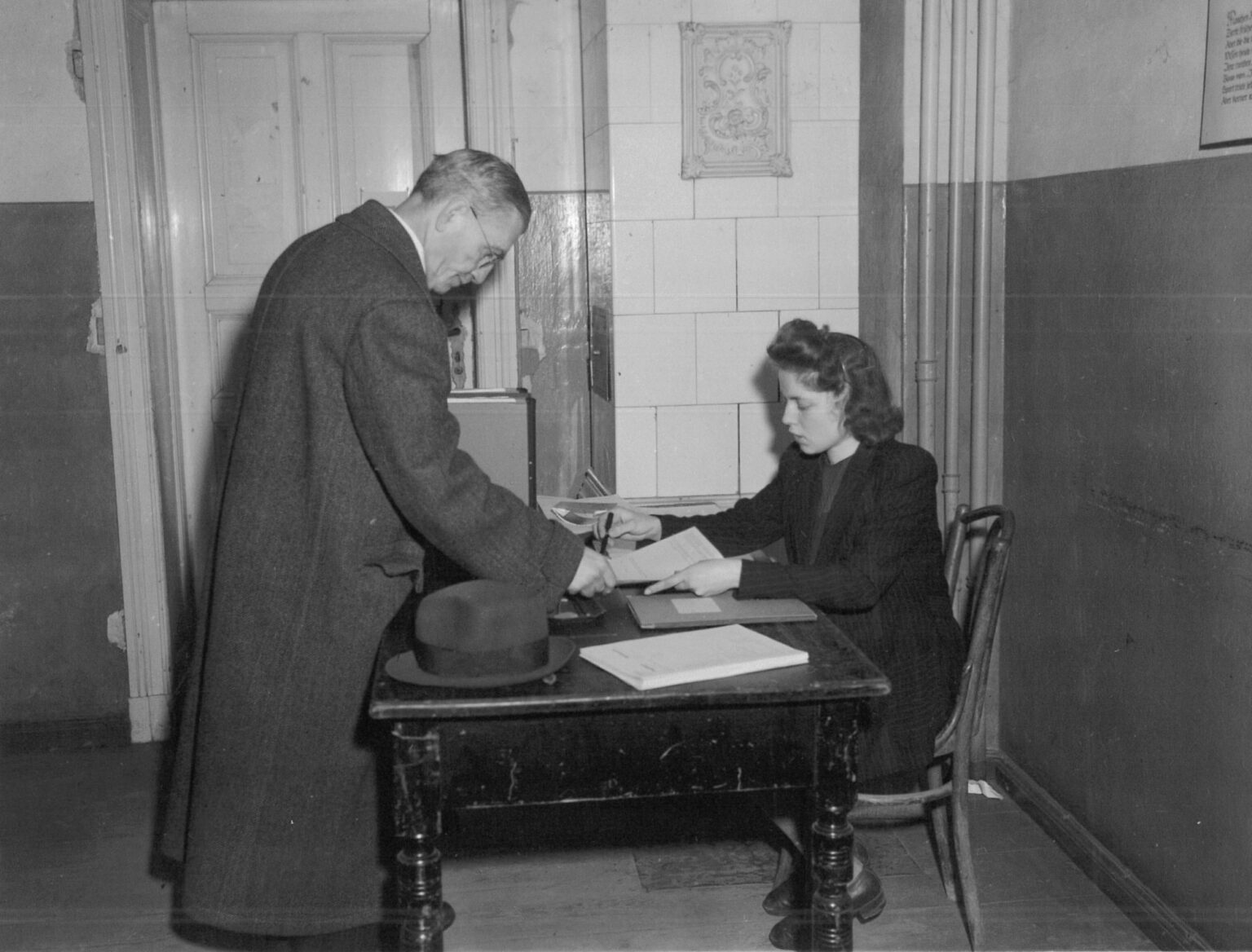
Carl Orff never joined the Nazi Party or held any leadership position in the third Reich. Nevertheless, Carmina Burana has become synonymous with fascist art and culture in 1930s Germany. As a result, Orff remains a figure of debate, with questions surrounding artistic responsibility, and the denazification of concert programmes. He is often characterised as an opportunist both during and after the war. In the post-war denazification proceedings. Orff inflated his relationship with the anti-Nazi resistance to have a more favourable position. This suggests that Orff was driven less by ideology than by pragmatism, with self-preservation remaining his foremost concern.
Carmina Burana still resonates with audiences today, whether that be in the concert hall, the football stadium, or an advertisement on the television.
Samuel Foxon, April 2026
If you wish to use or adapt any part of these notes, please do get in touch!