
When asked to name the pioneers of Western classical music, many would turn to figures such as J. S. Bach, whose mastery of harmony and counterpoint helped define the Baroque era; Joseph Haydn, whose ingenuity shaped the development of the symphony and string quartet; or Ludwig van Beethoven, whose extraordinary command of musical expression pushed the boundaries of what music could communicate.
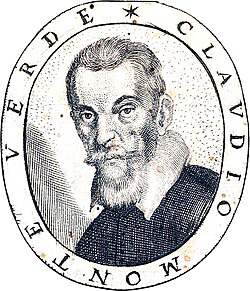
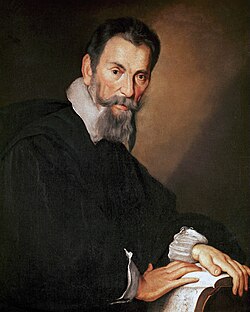
Often overlooked is Claudio Monteverdi, whose contribution to the development of Western music was every bit as significant. Living at the transition between the Renaissance and Baroque periods, Monteverdi brought together technical mastery, expressive innovation, and dramatic imagination, in ways that laid the groundwork of music for generations to come. He was influential in establishing opera as a major musical form, bringing a new sense of drama and emotional intensity to both sacred and secular music. He was instrumental in developing the use of instruments, laying important foundations for the development of the modern orchestra. Monteverdi was not simply a product of his age, but one of the composers who defined it.
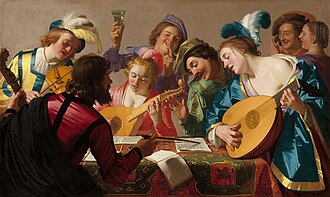
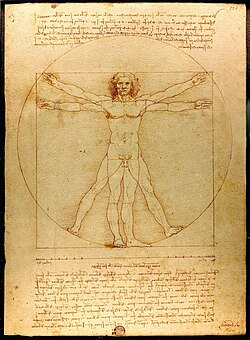
The early seventeenth century was a pivotal period in European history. The Renaissance (meaning ‘rebirth’) had spread across the continent, revitalising the artistic, political, and intellectual life of Europe, through a renewed interest last seen under the classical civilisations of the ancient Greeks and Romans. It was an age of extraordinary discovery and creativity, which produced artists such as Raphael, Donatello, and Michelangelo, alongside pioneering scientists such as Copernicus and Galilei. Perhaps the ultimate embodiment of the Renaissance man was Leonardo da Vinci, who is famed as an artist, scientist, and inventor.
By the time of Monteverdi’s birth in 1567, the Renaissance was beginning to give way to a new artistic age. The ideals of Renaissance music, with its intricate use of multiple melodic lines, were increasingly challenged by a growing desire for greater emotional expression and dramatic intensity. Across art, architecture, and music, there was a growing emphasis on the human experience: evoking emotion rather than simply conveying the ineffability of the divine.
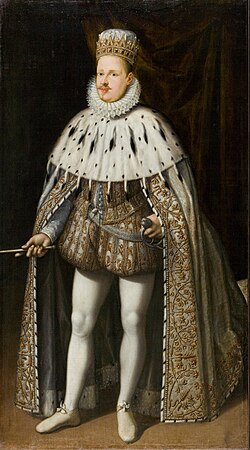
Monteverdi was considered a prodigy. His first published collection, Sacrae Cantiunculae, appeared in 1582, when he was just fifteen. He studied at Cremona Cathedral and went on to publish several books of madrigals (secular vocal compositions) and motets (sacred vocal works). His career subsequently took him to the court of Vincenzo Gonzaga in Mantua, where he was initially employed as a string player before rising to the prestigious position of Maestro di cappella (Master of music).
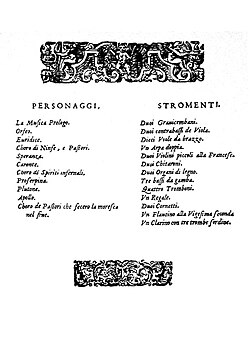
Monteverdi became a master of two contrasting approaches to composition. The first, prima pratica, drew upon the established Renaissance tradition of intricate polyphony, in which independent melodic lines intertwine, often using a cantus firmus, which is a pre-existing melody, often drawn from Gregorian plainsong, familiar to many in the Church. The second, seconda pratica, embraced a more radical approach, allowing musical harmony and structure to serve the expression of the text. Influenced by the emerging operatic style, it made greater use of expressive dissonance and stile recitativo, in which the music follows the natural inflections of speech to convey drama and narrative. In 1607, Monteverdi had composed L’Orfeo, which is perceived by many to be the first Opera by the contemporary definition. The orchestral line up brought together strings and brass with a continuo group of harpsichords, harps and organs. This use of a diverse instrumental ensemble, with the basso continuo providing the harmonic foundation, helped establish important principles of Baroque orchestration and laid some of the foundations for the development of the modern orchestra.
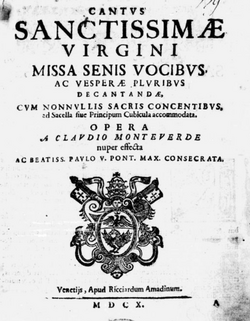
By 1610, Monteverdi was becoming increasingly dissatisfied with his position at the Gonzaga court in Mantua. In search of new opportunities, he travelled to Rome to seek an audience with Pope Paul V, taking with him a newly published volume containing two substantial sacred works. The first was his Missa ‘In illo tempore’, dedicated to the Pope and demonstrating Monteverdi’s command of prima pratica. Alongside it was what would become one of his most celebrated sacred works: Vespro della Beata Vergine (Verspers for the Blessed Virgin).
The Renaissance tradition of Marian Vespers called for the use of appropriate plainsong antiphons to be used in between settings from the book of psalms, and before the Magnificat, the song of Mary. Monteverdi has enhanced this offering to include an opening movement, a hymn, a sonata from the Marian litany, and 5 songs, which, whilst religious in nature, are not liturgical.
This raises an intriguing question: what were Monteverdi’s intentions in assembling such an eclectic collection of music? Did he envisage the Vespers being performed as a single, unified work within a liturgical setting? Was the publication a commercial venture, designed to appeal to the widest possible audience, or perhaps a carefully curated curriculum vitae intended to demonstrate his mastery of contrasting styles?
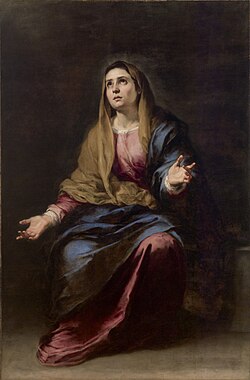
There is evidence to suggest that the collection could have served a liturgical purpose. Two of the sacred concertos, Nigra sum and Pulchra es, draw their texts from the Song of Songs, the biblical poem renowned for its sensual imagery. It was common in the period to portray the Virgin Mary as the Bride of the Church, and to interpret the passionate imagery of the Song of Songs as an expression of divine love. Far from being incompatible with Marian devotion, these texts could therefore carry profound spiritual significance. Another of the songs, Duo Seraphim, focuses on the importance of the Trinity, which was held in equal regard to the Virgin Mary in the Mantuan Court. The ducal chapel of Santa Barbara in Mantua, where Monteverdi served, may well have provided a suitable setting for such music, perhaps even for a service honouring its own patron saint rather than the Virgin Mary.
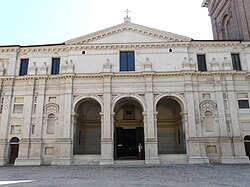
Yet, the case for commercial purpose of the publication is just as compelling. Monteverdi may have drawn upon music already composed for Santa Barbara, adapting and republishing it within a collection dedicated to the Virgin Mary to reach a wider audience. The variety of parts required, from solo voices to as many as ten vocal parts, would have made the publication versatile. Choir directors could select individual movements according to the forces available to them.
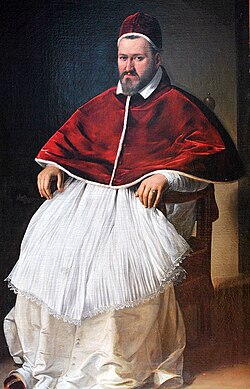
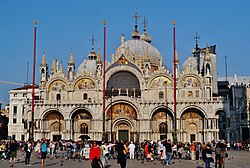
The argument that it was an act of self-promotion is equally as convincing. By presenting Pope Paul V with a publication that demonstrated both his mastery of his older prima pratica and his newer seconda pratica, Monteverdi could showcase the full breadth of his compositional abilities. In 1612, he lost his employment at the Gonzaga court, and the following year he was appointed Maestro di cappella at St Mark’s Basilica in Venice, one of the most prestigious musical posts in Europe. His successful appointment followed the submission of a Mass as part of the application process. Whether the papal dedication of the Vespers played any part in advancing his career is unknown.
Realistically, the answer may lie somewhere between all three possibilities. The Vespers display an extraordinary range of musical styles, bringing together the intricate counterpoint of the Renaissance with the expressive solo writing and dramatic contrasts of the emerging Baroque. This diversity suggests that Monteverdi may not have intended the collection for a single purpose, but rather created a work that could serve several ends at once.
Commentary
I. Deus in adjutorium
This brief but brilliant introduction reworks the opening Toccata from Monteverdi’s opera L’Orfeo (1607). This movement alternates between a jubilant D major chord, and a ritornello, or returning idea.
II. Dixit Dominus

A setting of Psalm 110, this is a striking work of contrasts. Solo passages alternate with full choral declamation on a falsobordone (fixed chord), lively contrapuntal writing and orchestral interludes. Throughout, fragments of Gregorian chant appear in different voices, before the Gloria Patri introduces the unornamented version sung by a solo tenor.
III. Nigra sum
A beautiful example of the new monodic style, in which a solo voice takes centre stage, this setting of the Song of Songs is an intensely expressive love song. Monteverdi had already shown what his ability to capture sensuality and youthful passion in song, through his published secular madrigals. After all, this is a love song. The tenor soloist’s elaborate ornamentation, particularly the rapid repeated notes known as trillos, reflect the expressive performance practices of the newer style.
IV. Laudate pueri

A setting of Psalm 113, this movement puts the Gregorian chant front and centre. Monteverdi uses metrical shifts alongside word painting for expression, such as the use of the triple-time choral interruptions rising on suscitans (“raising up”) and erigens (“rising”). The movement with the Glorai Patri – on the word Amen, the choir falls silent part by part, leaving just two tenor soloists, reaching the same note.
V. Pulchra es
Like Nigra sum, this beautiful and tender duet takes its text from the Song of Solomon. In the expressive style of the seconda pratica, the two sopranos sing in a delicate musical dialogue, with sensitive word-painting.
VI. Laetatus sum

A setting of Psalm 122, this movement opens with a constantly moving bass line, a recurring musical idea that returns throughout. Beneath the virtuosic soloists and full choir, the Gregorian chant relentlessly continues.
VII. Duo seraphim
Two tenors begin in close harmony, their elaborate ornamentation and repeated-note trillos creating an atmosphere of heavenly mystery as they portray the seraphim calling to one another.
VIII. Nisi Dominus

A setting of Psalm 127, this is Venetian polyphonic writing at its most spectacular. The two four-part choirs combine intricate counterpoint and dazzling rhythmic interplay, while the Gregorian plainsong is sung in long notes by the tenor soloists. Each choir sings a verse in antiphony, until the entries overlap on the words confundetur (“confounded”). The Gloria Patri repeats the dazzling polyphony from the opening of the movement.
IX. Audi cœlum
Monteverdi creates a playful dialogue between two tenor with an ingenious poem that utlises the idea of an echo, with the second tenor repeating the endings of the first singer’s phrases, cleverly transforming them into new words and meanings: gaudio (“joy”), becomes audio (“I hear”); benedicam (“to bless”) becomes dicam (“I tell”). This ingenious wordplay gives way, on the word Omnes (all), to the full choir in an expressive choral passage, praising the Virgin Mary.
X. Lauda Jerusalem

A setting of Psalm 147, this movement is scored for two choirs, and like Nisi Dominus, the cantus firmus is sung by a tenor soloist. The interplay between the two choirs and the sustained chant creates a rich texture. I Love You.
XI. Sonata sopra Sancta Maria
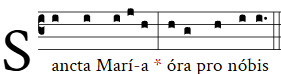
In this sonata, the sopranos repeatedly sing the plainchant invocation Sancta Maria, ora pro nobis (“Holy Mary, pray for us”). The chant shifts rhythmically, with rests added at differing intervals, highlighting a different word in each repetition.
XII. Ave maris stella

Monteverdi sets this Gregorian chant hymn, associated with the liturgy of Mantua, across seven verses shared between the choirs and soloists.
XIII. Magnificat

The Magnificat is the song of Mary, which she sings at hearing the news that she shall bear Jesus. The work concludes with the full choir in a majestic Gloria Patri.
Samuel Foxon, November 2026
If you wish to use or adapt these notes, please get in touch!